
Why is Horror Compelling?
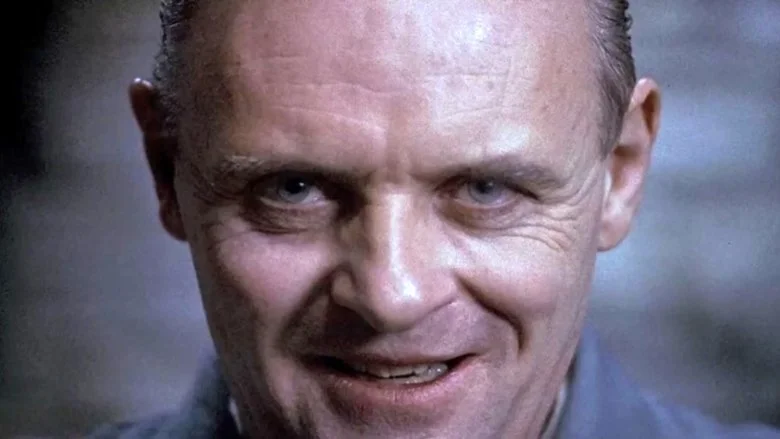
Hume’s Paradox of Tragedy questions why we take pleasure in consuming works of art that evoke negative emotions such as fear, sadness, or disgust (Hume, 1742). Though we would normally want to avoid these emotions in real life scenarios, it’s very common for us to engage with works such as tragic plays and horror films that are designed to make us feel these emotions. Hume believed that the reason we so often enjoy these kinds of works is because of the artistry and aesthetics that they are composed of (Hume, 1742, p. 26). He argued that these aesthetics override the feelings of pain and terror and turn them into feelings of pleasure. However, more recent philosophers have offered different explanations of this phenomenon, particularly in regard to the pleasure found in the horror genre. Noël Carroll and Berys Gaut each approach Hume’s paradox from different perspectives. Carroll’s solution to the paradox explains our enjoyment of horror through curiosity, specifically of the “monster”, while Gaut’s solution is attributed to emotional enjoyment. To effectively examine these theories, this essay will first provide more insight as to what Hume’s Paradox of Tragedy as well as what his proposed resolution fully entails. Then, it will examine how Carroll and Gaut reinterpret this paradox in terms of horror’s appeal, comparing and contrasting how each theory relates to Hume’s. Finally, I will argue that Gaut’s emotional enjoyment-based model provides a stronger explanation of why we find pleasure in horror compared to that of Carroll’s.
David Hume’s discussion of the Paradox of Tragedy begins from the observation that it’s natural for humans to avoid negative feelings like fear, sadness, and disgust, yet we often seek out works that are specifically designed to evoke precisely those emotions. While Hume acknowledges that the emotions that we experience while consuming a tragic art work can be genuinely painful, he also believes that because they occur within an aesthetic context, the emotions are transformed from feelings of pain to ones of pleasure. According to Hume, a work that displays artistic and aesthetic excellence can convert the negative emotions we experience into positive ones because of our admiration for its beauty and craftsmanship (Hume, 1742, p. 26). The artistry of the work is the key to this emotional transformation.
For Hume, the appeal of tragedy isn’t that we enjoy the feeling of sadness itself, but that we enjoy the aesthetically pleasing experience of it. He claims that our brains are capable of combining the feelings of pain and pleasure, producing a complex yet positive emotional experience. However, Hume’s explanation relies heavily on the quality of the artistry. If the tragic work is lacking aesthetically, poorly executed, or excessively disturbing, the conversion of emotions will most likely fail, leaving the negative feelings to remain dominant (Hume, 1742, p. 28). Because Hume’s solution relies so heavily on aesthetic excellence, later philosophers, like Carroll and Gaut, sought to offer their own solutions to the paradox.
Noël Carroll’s approach to the Paradox of tragedy is based specifically on the horror genre and centers around the narrative rather than aesthetics as Hume’s approach does. Carroll argues that the emotions of fear and curiosity are the main drivers of our understanding of horror. He claims that horror narratives revolve around what he calls the “discovery plot,” in which the protagonist and audience encounter and try to understand the monster (Carroll, 1990, p. 300). The story engages the audience by making them want to know what the monster is, where it came from, and what its motives are.
Carroll’s theory also explains why horror’s appeal extends to even low-budget or poorly made horror films, such as Terrifier (2016) or Paranormal Activity (2007). Films like these can still captivate audiences because of their suspenseful narratives which sustain the audience’s curiosity. Carroll’s account therefore resolves the Paradox of Tragedy through an intellectual standpoint rather than an aesthetic one.
Berys Gaut challenges both the Paradox of Tragedy itself as well as Carroll’s solution. In Gaut’s “Enjoyment Theory,” he argues that the Paradox of Horror exists only because we assume that emotions like fear and disgust are inherently unpleasant, yet if we reject this assumption, the paradox will no longer exist (Gaut, 1993, p. 336). Gaut says that when the audience is in a safe, controlled environment, people can genuinely enjoy the experience of being scared (Gaut, 1993, p. 321). In this sense, horror is engaging because fear itself can be pleasurable.
Gaut has many critiques of Carroll’s theory. First, he believes that Carroll’s emphasis on “the monster” minimizes forms of horror where there isn’t a supernatural or clearly defined antagonist (Gaut, 1993, p. 334). Some examples of this are characters like Norman Bates in Psycho or Hannibal Lecter in The Silence of the Lambs who show that horror and fear can arise from humans and “the ordinary.” Second, Carroll’s theory excludes non-narrative horror such as music and paintings. Finally, Gaut argues that Carroll’s theory makes “negative” emotions like fear and disgust too withdrawn from our actual enjoyment. According to Carroll, these emotions are the price we pay for cognitive satisfaction, but Gaut insists that this division is unnecessary: fear and disgust themselves can be sources of pleasure.
Gaut pulls on insights from philosophers of emotion like Kendall Walton and Alex Neill, who argue that emotions are not inherently unpleasant, to defend his position. In real life, fear feels negative because it signals danger, but in a fictional context, we don’t feel those signals as deeply because we can experience fear without feeling truly threatened. Therefore, we can enjoy the exhilaration of fear itself without any real-world consequences. This explains why fans of horror purposely pursue terrifying experiences.
Gaut also rejects the “Control Thesis,” put forth by Marcia Eaton, which suggests that we find enjoyment in horror because we feel in control of the experience (Gaut, 1993, p. 338). He notes that we often don’t feel in control when consuming horror. A good story should intentionally disorient us, make us feel vulnerable, and overwhelm us. Yet we still seem to enjoy it. Therefore, enjoyment isn’t derived from control but from the emotions themselves.
In my opinion, Gaut’s theory is more compelling than Carroll’s because it captures the broad range of horror experiences and media. Carroll’s theory limits the enjoyment of horror to curiosity and intellectual engagement, but many horror fans describe the allure of horror in emotional terms. Gaut’s theory allows for diversity by recognizing that the emotions of horror can elicit enjoyment themselves if under safe conditions. Gaut’s theory also aligns with the psychological evidence about adrenaline driven pleasure, which strengthens its credibility beyond philosophical speculation.
An example that comes to mind to support this claim is Ari Aster’s Hereditary (2018), a film that is described as both horrifying and captivating. Its horror sources from the emotions of dread and terror that it evokes, not from the curiosity of a monster. The power of the film exists in its ability to maintain tension rather than answering questions of the narrative. To Carroll, the lack of clear explanation or closure should diminish the enjoyment of horror, but to Gaut, it’s the emotional immersion that makes horror enjoyable.
The Paradox of Tragedy and Horror challenges us to explain why we find pleasure and enjoyment in what we should naturally turn away from. Noël Carroll attempts to offer a solution to Hume’s paradox by explaining the enjoyment of horror through cognitive and intellectual pleasure in terms of curiosity. Berys Gaut, however, dismantles the paradox altogether, arguing that fear and disgust are not inherently unpleasant emotions because in the right circumstances, they can be enjoyable. His theory accounts for not only narrative horror, but also musical, visual art, and haunted attractions. Ultimately, Gaut’s Enjoyment Theory shows that often the simplest answer is the most logical: sometimes, it simply feels good to be scared.
Works Cited:
Carroll, Noël. “Why horror?” The Philosophy of Horror, 1990, pp. 297–316, https://doi.org/10.4324/9780203361894-10.
Gaut, Berys. “The Paradox of Horror.” The British Journal of Aesthetics, vol. 33, no. 4, 1993, pp. 333–345, https://doi.org/10.1093/bjaesthetics/33.4.333.
Hume, David. “Of Tragedy.” Essays Moral, Political, and Literary, London, 1742, pp. 25–28.
